Facebook
 X
X
 Pinterest
 Copy Link
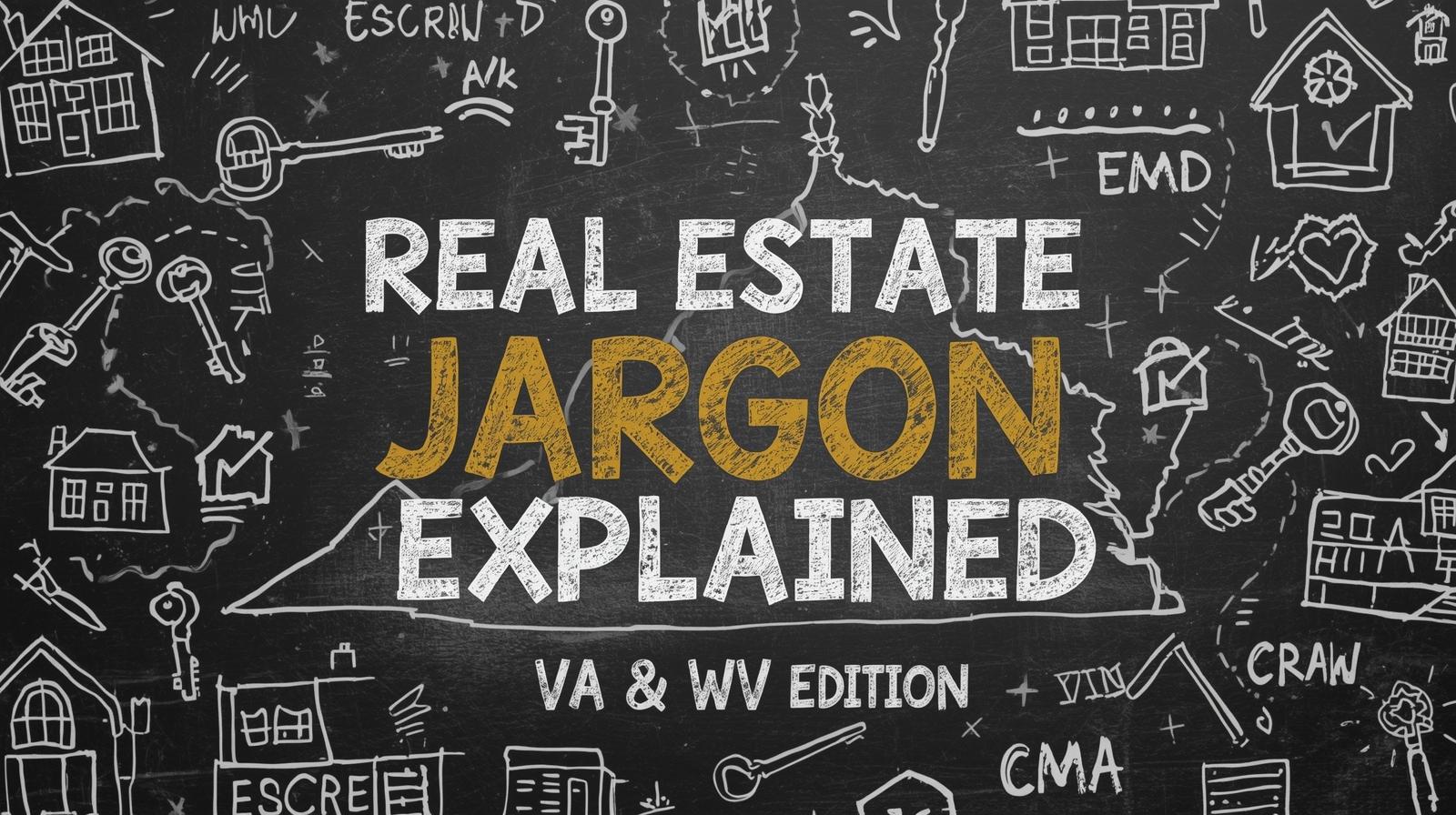
Buying or selling a home can already feel overwhelming—but when the paperwork starts using terms like “EMD,” “escrow,” or “due diligence,” it can feel like an entirely different language! To make your real estate experience in Virginia and West Virginia easier, I’ve broken down some of the most common terms you’ll encounter in our regional market.
1. EMD (Earnest Money Deposit)
This is your “good faith” deposit—money you put down to show you’re serious about purchasing a home. In both VA and WV, it’s typically held by the broker or title company until closing. The amount varies (usually 1–3% of the purchase price) and is credited toward your closing costs or down payment.
2. Contingency
A contingency is a condition that must be met for the sale to move forward—like a home inspection, financing approval, or appraisal. Virginia and West Virginia contracts are both contingency-driven, meaning they protect both buyers and sellers while keeping the deal fair.
3. Appraisal vs. Assessment
These two words are often mixed up.
-
Appraisal: Ordered by your lender to determine the market value of the home.
-
Assessment: Conducted by the local government for property tax purposes.
In both states, the appraisal ensures the home’s value aligns with the loan amount—especially important for VA and USDA loans common in our region.
4. Escrow
Escrow is a neutral account that temporarily holds funds—like your EMD or closing money—until the transaction is complete. It protects both parties during the sale. In Virginia, escrow is usually managed by a settlement agent or attorney, while in West Virginia, title companies often handle it.
5. Closing Costs
These are the fees and expenses (beyond the purchase price) paid at the end of a real estate transaction. They may include loan origination fees, title insurance, transfer taxes, and more.
6. Dual Agency (and Why It Matters)
Dual agency means one agent represents both the buyer and seller. It’s legal in both VA and WV but must be disclosed in writing. As your trusted realtor licensed in both states, I always prioritize transparency—ensuring you understand your options before signing anything.
7. PITI (Principal, Interest, Taxes, and Insurance)
Your monthly mortgage payment includes these four parts:
-
Principal: The loan amount.
-
Interest: The lender’s charge for borrowing money.
-
Taxes: Property taxes (usually paid via escrow).
-
Insurance: Homeowner’s insurance.
Understanding your PITI gives you a true picture of your monthly homeownership cost.
8. CMA (Comparative Market Analysis)
A CMA is an estimate of a home’s market value based on recent sales of similar properties nearby. I use this tool to help sellers price their homes competitively and buyers make strong, informed offers in our VA & WV markets.
9. Title Search
Before closing, a title company will check the property’s ownership history to ensure there are no liens, disputes, or legal issues. This is standard in both states—and essential for a smooth closing.
10. Under Contract vs. Pending
When a home is “under contract,” it means the buyer and seller have agreed to terms, but contingencies remain. “Pending” means those contingencies have been satisfied and closing is near!
💬 Final Thoughts
Whether you’re buying in the rolling hills of Berkeley County, WV or selling your home in historic Winchester, VA, understanding the language of real estate helps you feel confident every step of the way. My job is to translate the jargon, handle the details, and make your real estate experience simple, smooth, and successful.
Let’s make sense of real estate together—one term (and one home) at a time.